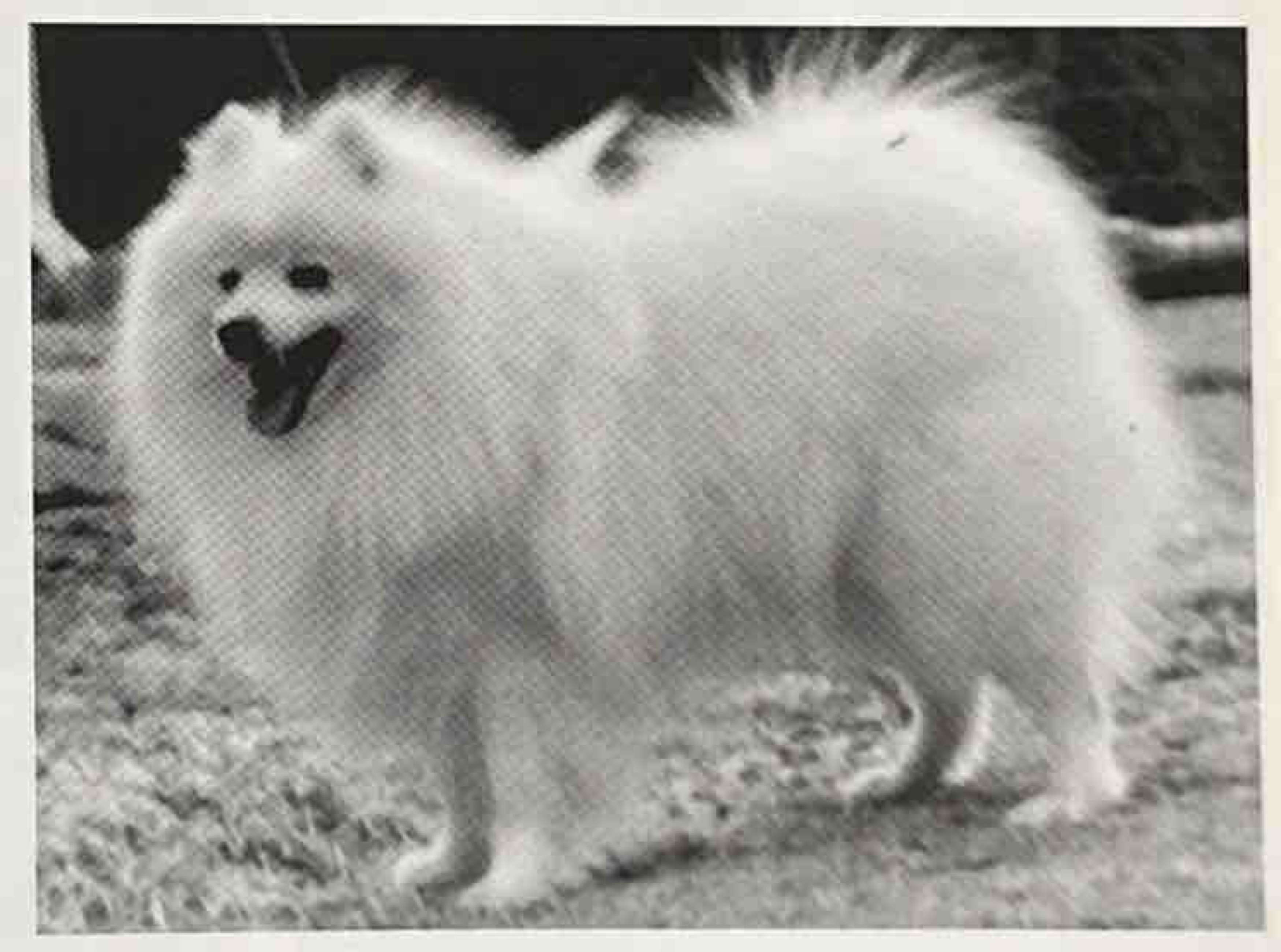
name: Snow of Green Hill – スノーオブ グリーンヒル
gender: Male
breed: Japanese Spitz
origin country: Japan
kennel: Green Hill
birth date: 25 October 1947
role: Foundation Sire
The lineage of Snow of Green Hill:
Snow of Green Hill スノーオブ グリーンヒル | Taro Komori タロウ・コモリ |
| Cherry Komori チェリー・コモリ |
We can find the background of a dog “Snow of Green Hill” (スノー・オブ・グリーン・ヒル) in Spitz Handbook. According this book “Snow of Green Hill” was owned by Mr. Masao Morita (森田正雄氏) from the Green Hill Kennel (グリーンヒル犬舎) in Tokyo. This dog has won several awards in Tokyo. Before he lived in Nagoya (名古屋.) and was a part of a lineage imported by Mr. Mori (森さん).
Snow of Green Hill is great-grandfather of Chinny of Arakawa (チニー・オブ ・アラカワ牡) who was one of founders of Sazanamison Line
Flipping through the pages of old Japanese books is like stepping into a treasure trove of history. Occasionally, you stumble upon familiar dog names that spark a thrill of recognition. You have the instinct of a fact hunter. You eagerly try to weave these newfound details into the tapestry of what you already know. Yet, the challenge lies in the hieroglyphs—beautifully intricate, but often figurative and layered with meanings that defy direct translation. Each guess feels like a leap into the unknown. You wonder if you’ve uncovered a hidden truth. Or, you have simply wandered down a path of misinterpretation.
Take the example from the Spitz Handbook: it mentions a dog named Taro (太郎). It’s unclear if this refers to the home name of Snow of Green Hill. It could also refer to his father, “Taro Komori” (タロウ・コモリ). The distinction lies in the writing system used
1. 太郎 – This is Taro written using kanji, the Chinese characters used in the Japanese writing system.
2. タロウ – This is Taro written in katakana. Katakana is a phonetic syllabary used for foreign words, scientific terms, and stylistic effects. It can also create a modern feel. .
While 太郎 and タロウ may represent the same name, the script used can subtly shift its nuance. Kanji conveys traditional weight and the layered meanings of the characters, while katakana often appears more modern, informal, or stylistic. The choice between them can influence the understanding of the name. It adds yet another layer of mystery to the story.
Reference
Spitz Handbook (1956) | Seibundo Shinkosha Co., Ltd. – “スピッツ読本 誠文堂新光社版