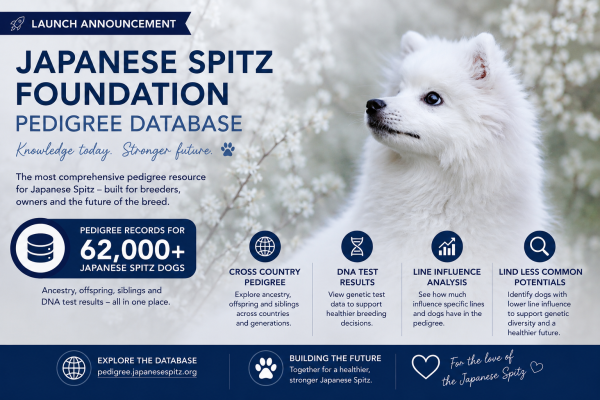
June 2026 PRA-rcd4 genetic testing report and dog database has been issued
Q2 2026 Summary
By the end of the first quarter of 2026, the Japanese Spitz Foundation has collected 507 PRA-rcd4 DNA test results.
The current picture looks like this:

- Clear (WT/WT): 68%
- Carrier (WT/MUT): 27.6%
- Affected (MUT/MUT): 24 dogs (4.5%)
During Q2 2026, the PRA-rcd4 programme remained active, but the pace of new result registration slowed noticeably. Since March, only 8 new results have been added to the register. This is a clear change compared with the earlier growth phase of the programme.
At this stage, two main explanations seem possible.
The first is positive: most active breeders who were ready to test may already have done so, and the main breeding population currently engaged with the programme may already be largely covered. If this is the case, the slowdown reflects saturation in the most responsive part of the population rather than loss of interest.
The second explanation is more cautious: as active outreach and regular reminders were reduced, some breeders may simply have relaxed and postponed testing or reporting. In that case, the slowdown would reflect reduced programme pressure rather than full practical coverage.
Most likely, the current situation includes some combination of both factors. The programme has already reached many of the most engaged breeders, but continued visibility and follow-up are still likely needed if testing and reporting are to remain active beyond the first motivated wave.
From a breed-health perspective, this slowdown does not necessarily indicate a problem, but it does mark a transition point. The programme may now be moving from an initial mobilisation phase into a maintenance phase, where future progress depends less on urgency and more on routine expectations, breeder culture, and continued transparency.
For Q2 2026, the main conclusion is therefore straightforward: the programme has likely captured a substantial part of the actively engaged breeding population, but it is too early to conclude that reporting is complete. Continued monitoring, periodic reminders, and visible publication of summary results remain important to understand whether the slowdown reflects successful coverage or declining momentum.
Provisional interpretation for Q2 2026:
The slowdown in new registrations is real, but its meaning is not yet fully clear. It may indicate that many active breeders have already tested, or it may indicate that reduced programme pressure has led to lower reporting activity. Q3 monitoring should help distinguish between these two possibilities.