We often face unique challenges when research on the breed’s history and origins. We also come across it when examining Japanese Spitz names written in hieroglyphs or non English local language. This research includes the transliteration of dog names from older Japanese books and documents. It is one of the most intriguing aspects. It is also often the most difficult. Even for modern sources, Romanization and translation are not standardized, older Japanese texts show a more variety of hurdles. Researchers, breeders, and enthusiasts must overcome these challenges.
In this blog post, we’ll explore some challenges in transliterating historical dog names. We will also examine how this process impacts our understanding of the breed’s heritage.
1. Diverse Transliteration Techniques
Japan’s history of Romanizing or transliterating foreign words into Katakana (the script used for non-Japanese words) has evolved over time. In older documents, dog names were often written in Katakana and then transliterated into Roman letters in various ways.
For example, names like “セントポール” (Saint Paul) might be transliterated as “Sentopōru”. Yet, with inconsistent or non-standardized ways, you might also come across them as “Sento Pōru” or “Sent Paul”. In the past, there was a lack of a unified system. Thus, we have to consider multiple interpretations for every name. This makes the process of tracing the dog’s lineage or understanding its full significance more complex.
2. Overcoming Literal Translation Pitfalls
Another major hurdle in transliteration is literal translation. Some names that look straightforward in Katakana may seem odd when translated directly into English. This is clear in the case of “ベルダ” (often transliterated as “Beruda”). Systems like Google Translate may offer odd variants like “VELDA”. They may even completely misinterpret the text as “Bamboo Drying Age” instead “Takechiyo”. The tool tries to follow patterns that might be familiar in modern contexts but not in historical naming practices.
This discrepancy can also occur with famous breed names, where the original intent behind the name gets lost in translation. A name that once had a historical or familial significance, might end up being read as a literal translation. It could also be interpreted as a product of phonetic similarity. The challenge, thus, is to preserve both the cultural and linguistic integrity of the original names.
3. The Influence of Regional Variations
In Japan, certain dog names from older books may also be influenced by regional dialects or pronunciations. For example, a dog name from a breeder in Osaka may use different transliteration patterns. These patterns can differ from those used in Tokyo or Hokkaido. These variations make it even more challenging for modern researchers to piece together precise histories of certain dogs or litters.
The Japanese Spitz breed spread across the world. The variations in how names were transliterated often reflected local customs and influences. This added layers of complexity to the task. Understanding the true lineage of early dogs in the breed became more challenging.
4. Understanding Historical Context
Historical context is essential when transliterating old Japanese dog names. In the past, Japanese breeders often relied on a combination of Kanji, Hiragana, and Katakana to represent names. These names might have symbolic meanings or references to certain qualities of the dog.
For example, a dog named “白王” (Hakuō) might be transliterated as “White King”. The Kanji 白 (Haku) for “white” and 王 (ō) for “king” combine to form a noble and meaningful name. Yet, without understanding the historical significance behind these choices, the name might lose its full meaning. The breeder’s intent is also important in the modern context.
5. The Influence of Foreign Languages
When examining older Japanese books, we find challenges. This is particularly true for those that cover the early development of the Japanese Spitz. We also face the challenge of foreign influences. In the early 20th century, many breeders in Japan worked with imported dogs. These came from countries like Germany, the UK, and the U.S. This led to hybrid names or names influenced by foreign languages.
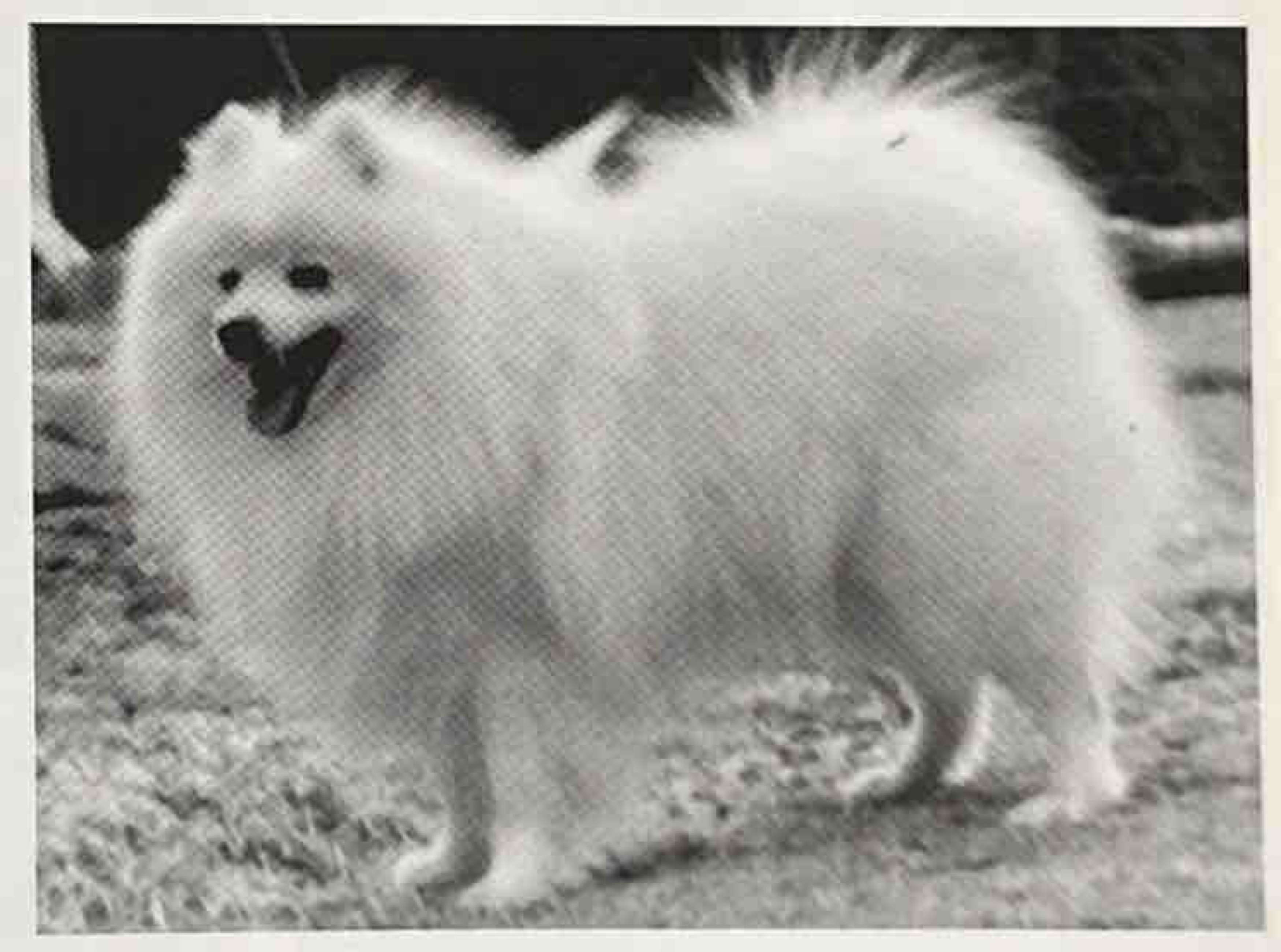
The first part of name Andoleason of Golden Meadow is a misspelling of the last name Maj Andreasson. Maj Andreasson first saw and purchased Götter-Mahls Shanshan at the Japanese Kennel Club’s exhibition. Maj Andreasson later assisted Mari-Anne Nyström, owner of the Alvretens Kennel, in importing Andoleason of Golden Meadow, along with Athena Leilani of Aloha Land Andoleason
These names can be tricky to transliterate. They may not follow Japanese naming conventions. Some names may have multiple origins. For instance, names like “King” or “Maxwell” may have been imported directly. Nonetheless, their transliteration into Japanese could differ based on the spelling or interpretation at that time.
6. Modern vs. Historical Spellings
The spellings of names in older records often differ from how they are written today. Modern breeders may prefer to standardize names. They use a consistent system of Romanization. Yet, older books may have used their own conventions. For instance, a name that might now be transliterated as “Taro” might have been spelled “Tarō” in the past. The use of Katakana and the varying phonetic interpretations of the time can cause inconsistencies.
7. The Impact on Pedigree Documentation
One of the most significant challenges of transliterating historical dog names is the potential impact it has on pedigree documentation. If names are mistranslated or inconsistently transliterated, it can lead to errors in family trees and lineage charts. For breeders, it’s crucial to understand the correct names of the dogs from earlier generations. This knowledge affects genetic health. It also influences breeding decisions and preservation of breed characteristics.
Conclusion:
Transliterating dog names from old Japanese books is a delicate and fascinating task. It demands a deep understanding of the language. An appreciation for the history and culture surrounding the Japanese Spitz breed is also necessary. The task is complicated by inconsistencies in the records, linguistic challenges, and the need for meticulous research. In this process, we will also apply the transliteration rules that Mari-Anne Nyström received in 70x from Mr. Hayami, as shared by the Japanese Spitz Association (NSA). Despite these complexities, the rewards are significant for those dedicated to preserving the breed’s legacy. We honor the dogs that laid the foundation for today’s cherished Japanese Spitz by analyzing and decoding these names carefully.


At the Japanese Spitz Foundation, we are dedicated to preserving this knowledge. We encourage you to share your thoughts, insights, and experiences with us. Join us as we explore the rich history of the Japanese Spitz breed.