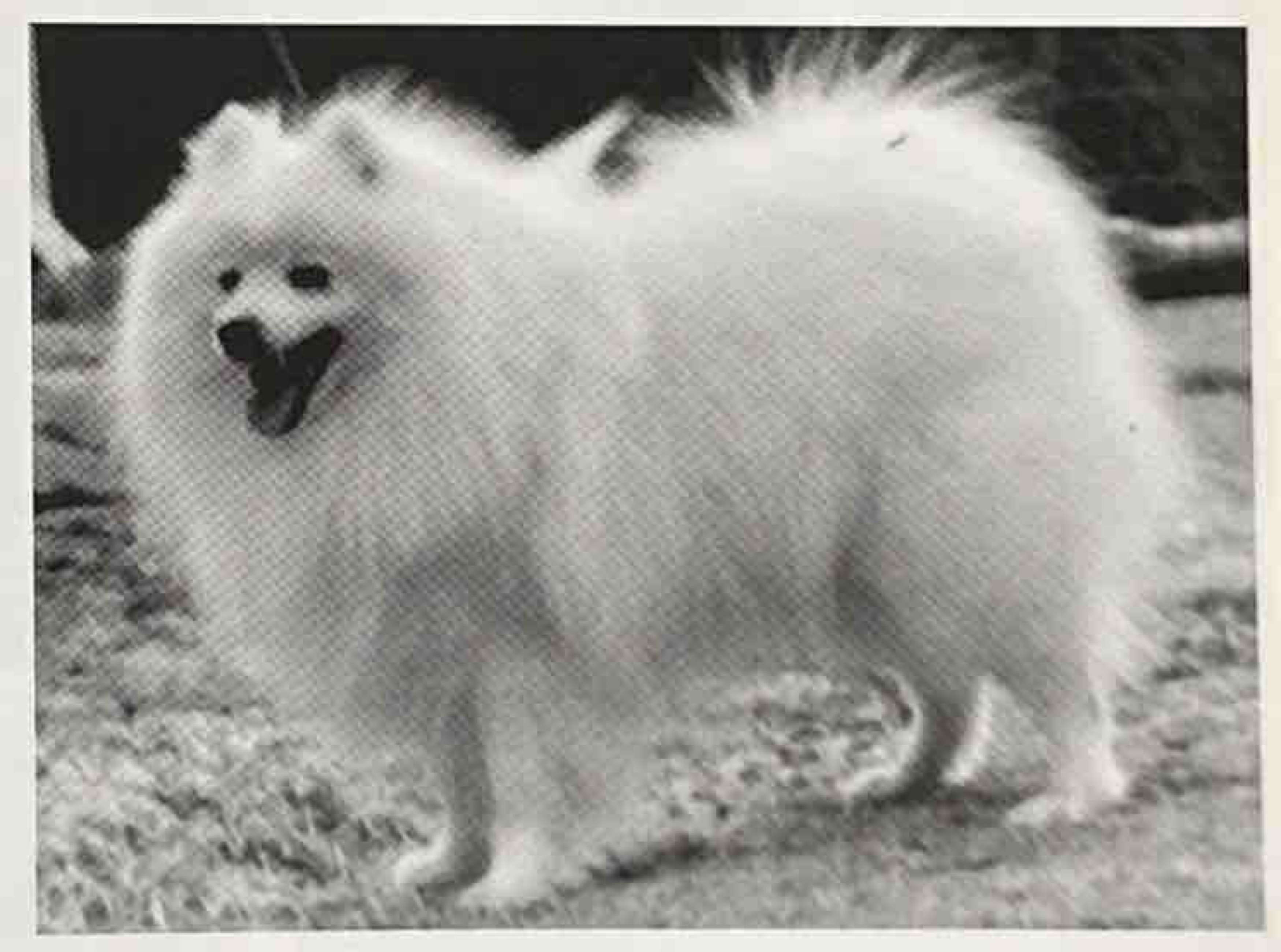
This rare 1962 photograph offers a glimpse into the golden era of the Japanese Spitz during Japan’s postwar boom. Look at this unknown dog of Spitz Boom Era.

gender: Male
breed: Japanese Spitz
origin country: Japan
original date: 1962 (昭和37年)
source: Japan Archives Association
photo caption: “1962 – Dogs (Showa 37) – The Spitz Boom”
The Japanese Spitz in 1962: A Glimpse into Japan’s Boom-Era Companion Dog
【196th年】犬(昭和37年)▷ブームのスピッツ
1962 – Dogs (Showa 37) – The Spitz Boom
I came across this photo in the Japan Archives Association’s collection, captioned:
We don’t have specific details about this particular dog. Even so, it’s a fascinating glimpse into how the Japanese Spitz looked. This was during the height of their popularity in early postwar Japan. These archival images offer valuable context to the breed’s visual history — long before international recognition or standardization took hold.
The dog appears to be standing confidently on packed earth, possibly at a community fair, dog event, or public exhibition. The casual clothing of surrounding people indicates a relaxed atmosphere. It is more a social or promotional occasion than a formal conformation show.
During the 1960s, the white, fluffy Spitz became a nationwide sensation in Japan. The breed was widely adored and quickly became a popular family pet. Still, that the rapid rise in popularity led to widespread, unregulated breeding. As a result, many dogs developed excessive vocal tendencies, and the public’s enthusiasm waned as quickly as it had ignited. The decline of the Spitz boom, was a regrettable outcome of that lack of planning.
Japanese Spitz in 1962 – a postwar icon of beauty, calm, and companionship
The 1960s marked a turning point for the Japanese Spitz. This change was not just in population numbers. It also gained cultural visibility across Japan. After the postwar recovery, families began seeking companion dogs. The white, fluffy silhouette of the Spitz quickly captured public imagination. Its appearance was often likened to a miniature Arctic fox. It was also seen as a cloud with paws. It stood out in neighborhoods, parks, and increasingly in newspapers and trade fairs.
This popularity boom was especially noticeable in urban centers like Tokyo and Osaka. Here, the breed’s clean white coat and expressive features fit well with Japan’s growing modern domestic aesthetic. The Japanese Spitz became a symbol of postwar prosperity. It was a beautiful, lively addition to the family. This breed didn’t demand much space or food. Yet, it offered presence, pride, and companionship.
Events like pet fairs, breed exhibitions, and school visits often featured the Spitz as the “ideal family dog.” A photo preserved by the Japan Archives Association illustrates how integrated the breed had become. It was a part of everyday life.
References
- Okada, Miwako. Spitz Bible. Tokyo: Seibundo Shinkosha Co., Ltd, 2023.— This work is a comprehensive reference. It compiles breed history and type development. The cultural perception of the Japanese Spitz from pre-war to modern eras is also included.
- Spitz Handbook. Tokyo: Seibundo Shinkosha Co., Ltd, 1955–1960. It is a foundational guide offers insight into mid-century breed standards. It also covers popular practices.
- Japan Archives Association (JAA). Archival Photograph Collection.Available at: https://jaa2100.org— Repository of historical Japanese media and public records, including visual documentation of domestic animals in Japan.