name: Take-Maru of Yokohama Takada
gender: Male
breed: Japanese Spitz
origin country: Japan
kennel: Yokohama Takada
birth date: 12 November 1984
role: Foundation Sire
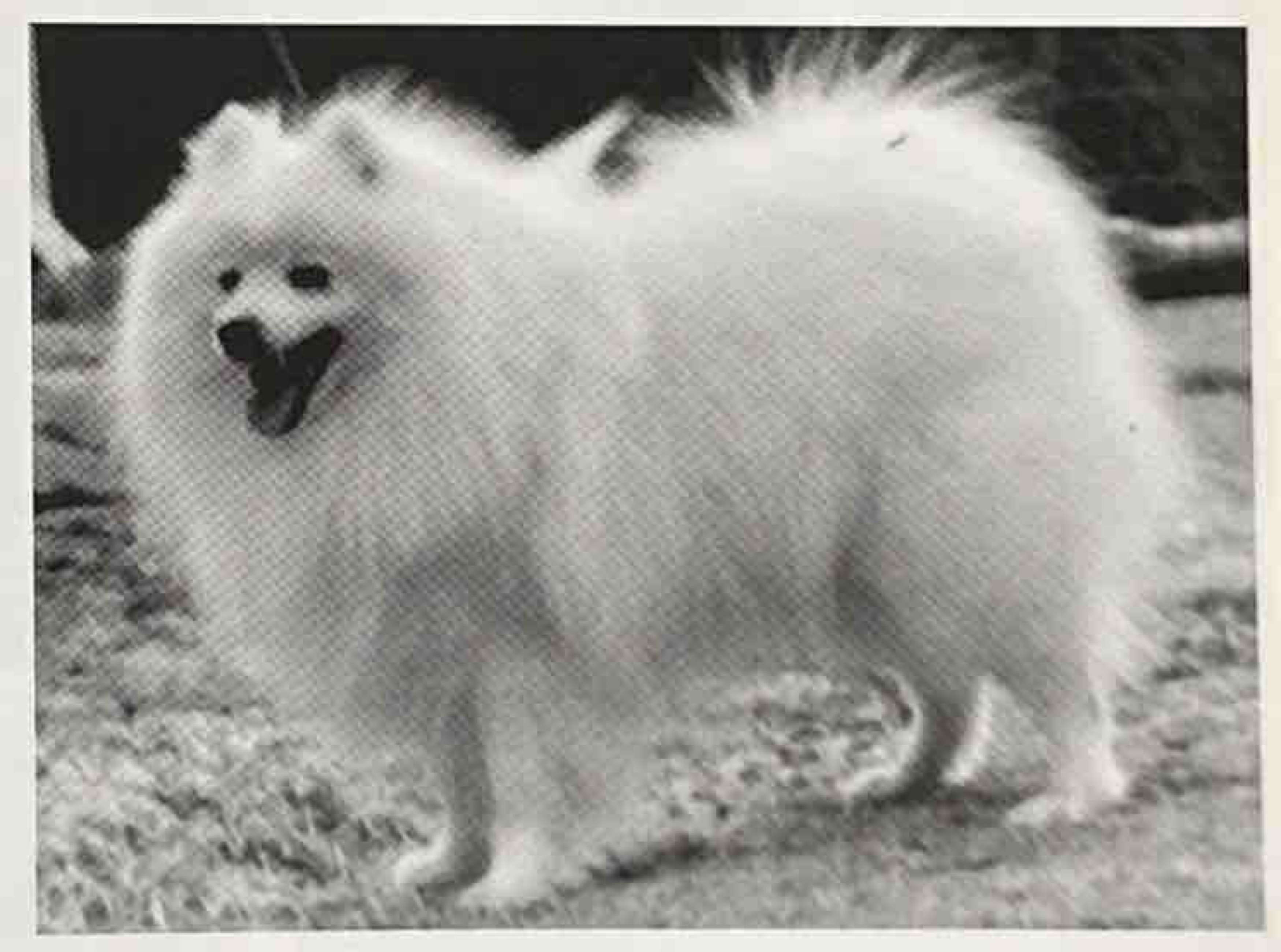
This day in March 1985, Marco G. Piasentin prepared for months. He then drove to Rome’s Leonardo da Vinci International Airport. He was there to welcome two four-month-old puppies sent directly from Japan. One of these japanese spitz was Take-Maru of Yokohama Takada who was born 12 November 1984 in Japan.
The lineage of Take-Maru of Yokohama Takada:
| Take-Maru of Yokohama Takada JKC SP-882/84 LOI 05461/85 | Sir | Alcyon of Port Masuda |
| Dam | Asa Giku of Mischief Queen |
The story of the Japanese Spitz in Italy begins with Marco G. Piasentin, a passionate dog enthusiast whose meeting with the breed would shape its history in Europe. In 1984, Marco began a journey. This journey would introduce the Japanese Spitz to a country where the breed was virtually unknown. At the time, most of Central and Southern Europe had little to no information about the Japanese Spitz. Only a handful of articles and booklets circulated in Scandinavia and England. Even these scarce materials offered little insight into the breed’s origins or development in Japan.
In 1983, Marco first heard about the “mythical” Japanese Spitz. Intrigued by its beauty and reputation, he began researching the breed. Fortunately, his professional connections in Japan gave him an advantage. Two close Japanese friends played a crucial role in his quest. They shared photographs, documents, and translated materials. These materials showcased the breed’s unique qualities. They also introduced him to Japanese Spitz breed clubs, where Marco built relationships with top experts and dedicated fanciers. Through these efforts, Marco came to understand the Japanese Spitz as a breed of remarkable beauty, charm, and character.
His fascination grew quickly. Marco made a decision that would change his life. The Japanese Spitz would become his breed of choice.
In March 1985, Marco drove to Rome’s Leonardo da Vinci International Airport. After months of preparation, he was there to welcome two four-month-old puppies sent directly from Japan. These were the very first Japanese Spitz to arrive in Italy. Marco was overjoyed to finally meet the pair—a male named Take-Maru and a female named Agree.

The journey was not without heartbreak. Just a few months after their arrival, Agree began showing signs of serious illness. Despite all efforts to save her, she passed away at just eight months old. A post-mortem revealed progressive interstitial nephritis, which had led to endocarditis and eventually heart failure. The cause of such a severe condition in so young a dog remained a mystery. Her loss was deeply felt.
Take-Maru, nonetheless, became the beacon of hope for the breed in Italy. He was a stunning representative of the Japanese Spitz and quickly proved to be the cornerstone of Marco’s breeding program. In 1987, Marco imported another female from Japan, re-establishing the pair and ensuring that Take-Maru’s legacy would endure.
Take-Maru’s influence extended far beyond Italy. He was one of the first Japanese Spitz imported into Europe. He became a foundational sire for the breed across the continent. His descendants helped shape the development of the Japanese Spitz population in Europe. His story is a testament to the resilience and determination needed to set up a new breed in country.

Through Marco’s dedication and the unforgettable legacy of Take-Maru, the Japanese Spitz found its place in Italy and beyond. This paved the way for its recognition and admiration worldwide.